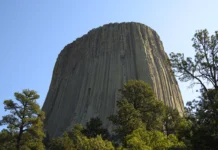

Gering, Nebraska is one of those places where the landscape does most of the talking. The town sits in western Nebraska, close against the bluffs, prairie, river valley, and old overland trail country that helped shape the American West. It is not a big city, and it does not need to be. Gering’s strength is its location. It gives travelers easy access to Scotts Bluff National Monument, the North Platte Valley, Wildcat Hills, Oregon Trail history, local museums, food, lodging, and some of the most recognizable landmarks in the Nebraska Panhandle.
The city itself is home to about 8,554 people, according to the U.S. Census Bureau’s 2024 population estimate. That makes Gering large enough to offer useful travel services, but still small enough to feel like a western Nebraska town instead of a crowded tourist center.
Scotts Bluff National Monument
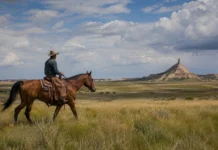
The main landmark is Scotts Bluff National Monument, located just west of Gering. The bluff rises about 800 feet above the North Platte River, making it one of the most visible and important natural landmarks in the region. Long before modern highways, Scotts Bluff helped guide Native peoples, fur traders, emigrants, soldiers, Pony Express riders, and settlers moving through the valley.
The monument protects more than 3,000 acres of prairie, badlands, rugged bluffs, historic trail remnants, and river valley landscape. It is connected to the Oregon, California, Mormon Pioneer, and Pony Express Trails, making it one of the strongest historic travel stops in western Nebraska.
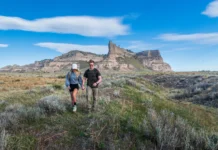
Visitors can explore the visitor center, walk trails, see covered wagon displays, drive the Summit Road when it is open, and look out across the North Platte Valley from the top of the bluff. From that view, it is easy to understand why this place mattered. The country opens wide in every direction. The valley, the river, the roads, the farms, and the towns all sit below the bluff like pieces of a much larger story.
What You Can Find in Gering
Gering is more than just the town next to the monument. It is a practical travel base for people visiting western Nebraska. Travelers can find hotels, restaurants, fuel, local shops, parks, visitor information, and access to nearby attractions. Gering and Scottsbluff function together as the main service hub for the area, which matters because the Panhandle is spread out. Out here, distances are real.
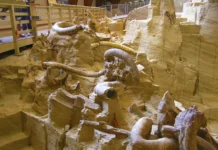
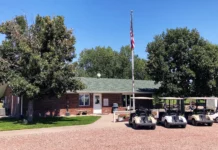
One of the best stops in Gering is Legacy of the Plains Museum, located near Scotts Bluff National Monument. The museum helps explain the human story of the valley, from Native history and pioneer migration to farming, irrigation, ranching, machinery, and rural life. If Scotts Bluff gives visitors the view, Legacy of the Plains helps explain what happened on the land below it.
South of Gering, travelers can visit Wildcat Hills State Recreation Area, where the terrain changes from open valley to pine-covered ridges, canyons, overlooks, and wildlife habitat. It is a strong stop for hiking, photography, bird watching, scenic driving, and anyone who wants to see a rougher side of western Nebraska.
How Many People Visit?
Scotts Bluff National Monument continues to draw travelers from across the country. The National Park Service reported 183,915 visitors in 2024, up from 174,267 visitors in 2023. That is a strong number for a monument in western Nebraska, and it shows that people are still drawn to this landmark, not just for its scenery, but for its connection to American history.
Those visitors come from many places. Some are local families from Gering, Scottsbluff, Mitchell, Morrill, Bayard, and the surrounding valley. Others come from across Nebraska, Colorado, Wyoming, South Dakota, Kansas, and beyond. Many are road-trippers following the Oregon Trail corridor, national park travelers collecting historic sites, photographers chasing western landscapes, families on summer vacation, and history-minded visitors who want to stand where emigrants once passed through on their way west.
Where People Call Home
The people who call Gering home live in a town shaped by agriculture, history, small business, tourism, and the surrounding landscape. Many residents have deep roots in the North Platte Valley. Others have come to the area for work, family, retirement, schools, or the slower pace of life that smaller western towns still offer.
Gering is also part of a larger community. Scottsbluff sits just across the North Platte River, and together the two cities serve as the population and business center of the region. People may live in Gering, work in Scottsbluff, farm outside town, commute from nearby communities, or run businesses that serve travelers coming through the Panhandle.
That blend matters. Gering is not just a place people pass through on the way to Scotts Bluff National Monument. It is a hometown, a county seat, a travel stop, and a gateway to western Nebraska.
Sites Near Gering Worth Visiting
Within a short drive of Gering, travelers can find several major landmarks and attractions.
Scotts Bluff National Monument is the centerpiece and should be the first stop for most visitors.
Legacy of the Plains Museum gives travelers a stronger understanding of the valley’s agricultural, pioneer, and cultural history.
Wildcat Hills State Recreation Area offers rugged scenery, trails, wildlife, and a different view of the Nebraska Panhandle.
Lake Minatare provides boating, fishing, camping, and open-water recreation not far from Gering.
Chimney Rock, near Bayard, is one of the most famous landmarks of the Oregon Trail and one of the most recognizable symbols of westward migration.
Courthouse and Jail Rocks, near Bridgeport, are another impressive set of trail landmarks rising from the plains.
Agate Fossil Beds National Monument, north of the valley, offers fossil history, prairie landscape, and stories connected to Native culture and early scientific discovery.
Fort Robinson State Park, farther north near Crawford, is one of Nebraska’s strongest historic and scenic destinations, with military history, lodging, trails, and Pine Ridge country.
Why Gering Belongs on a Western Nebraska Travel Route
Gering works because it is honest. It does not have to pretend to be something it is not. It is a western Nebraska town sitting beside one of the great landmarks of the American West. From Gering, visitors can explore Scotts Bluff, follow the old trail corridor, visit museums, drive open highways, photograph bluffs and buttes, and get a real sense of the country that shaped the overland migration story.
For travelers looking for polished tourist noise, Gering may feel quiet. For travelers looking for landscape, history, open sky, and a solid place to start exploring the Nebraska Panhandle, Gering makes sense.
This is landmark country. It is trail country. It is old road-trip country. And Gering, Nebraska sits right in the middle of it.