
Story & Photography by: Hawk Buckman
Fort Robinson State Park, near Crawford, Nebraska, is one of the most powerful historic destinations in the Nebraska Panhandle. Set beneath the rugged buttes of the Pine Ridge, the park combines military history, Native American memory, frontier tragedy, scenic beauty, museums, horseback riding, camping, lodging, wildlife, and wide-open High Plains landscape.
For travelers based in Gering, Scottsbluff, or visiting Scotts Bluff National Monument, Fort Robinson is a destination worth the drive. It is not just a state park. It is one of the places where the complicated story of the American West comes into full view.
The land is beautiful. The history is heavy. Both are part of the reason Fort Robinson still matters.
A Military Post on the Northern Plains
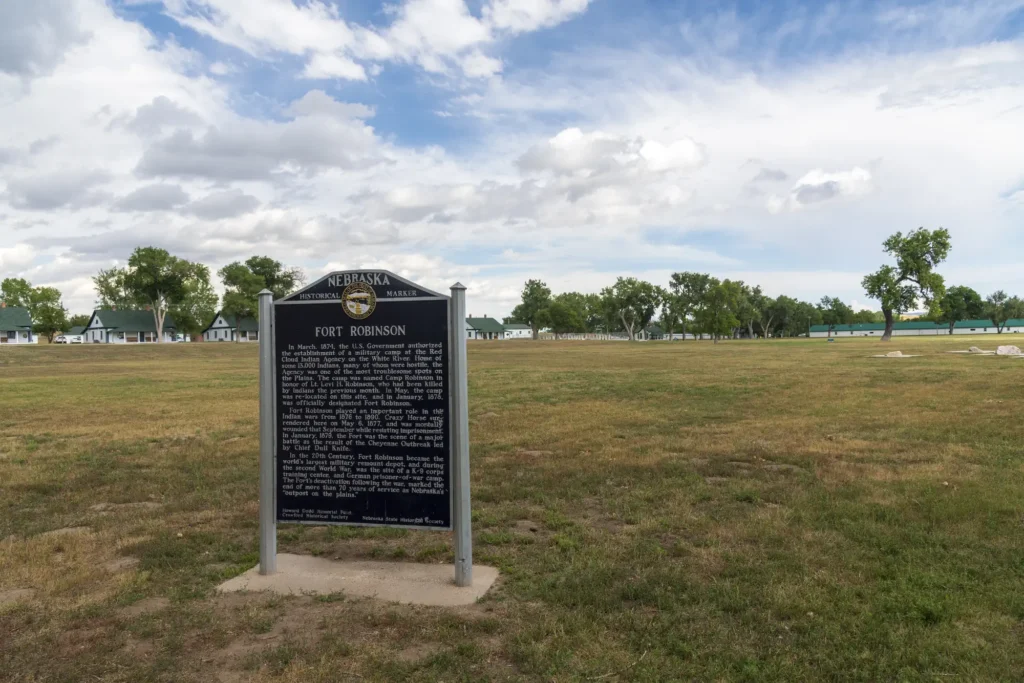
Fort Robinson began in 1874 as Camp Robinson, a military post established near the Red Cloud Agency in northwest Nebraska. The agency was tied to the Oglala Lakota under Chief Red Cloud, whose resistance had forced the United States to abandon the Bozeman Trail forts less than a decade earlier.
The Army’s presence was meant to support federal control of the agency and the surrounding region. On paper, the post existed to keep order. In reality, it stood in the middle of rising tension between Native nations, federal agents, settlers, and the U.S. military.
The post later became Fort Robinson and grew into one of the most important military sites on the northern Plains. Its history would stretch far beyond the frontier period, but its earliest years were shaped by the struggle over land, sovereignty, broken promises, and survival.
Crazy Horse and the Tragedy at Fort Robinson
No name is more closely tied to Fort Robinson than Crazy Horse, the Oglala Lakota leader remembered for his role in resisting U.S. expansion and for helping defeat Custer’s 7th Cavalry at the Battle of the Little Bighorn in 1876.
After Little Bighorn, the Army intensified its campaign against Lakota and Cheyenne bands that refused reservation life. By the spring of 1877, Crazy Horse and his followers were under growing pressure. His people were hungry, the military pursuit was relentless, and continued resistance had become nearly impossible.
In May 1877, Crazy Horse surrendered at the Red Cloud Agency. For a short time, he lived near Fort Robinson. But distrust remained on all sides. Army officers and federal agents feared he might leave the agency and join Sitting Bull in Canada. Rumors spread that he was planning escape or renewed resistance.
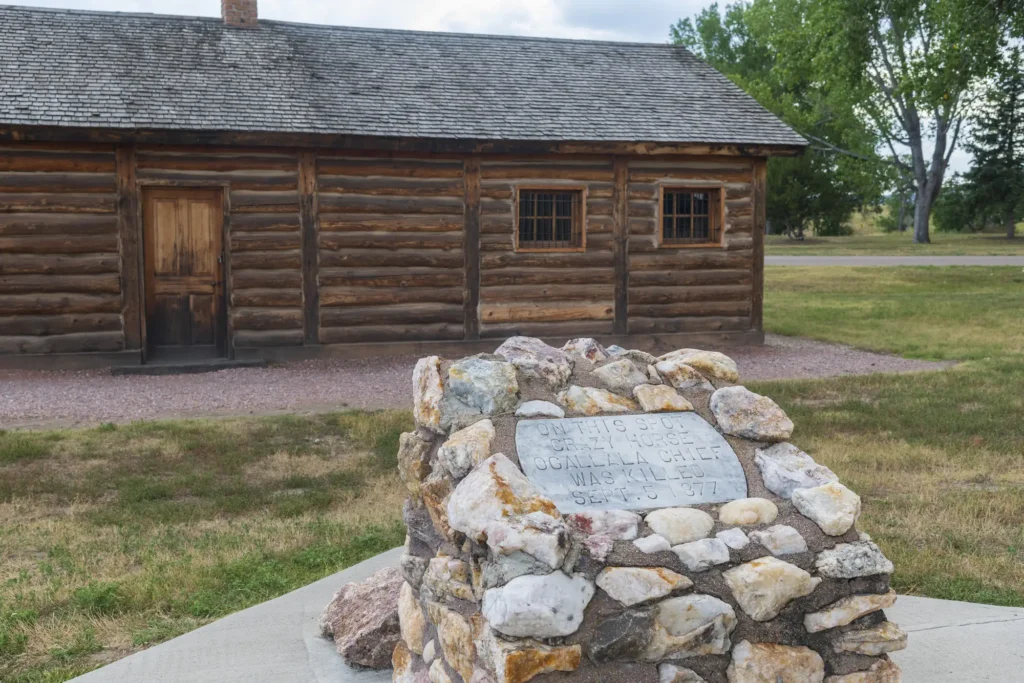
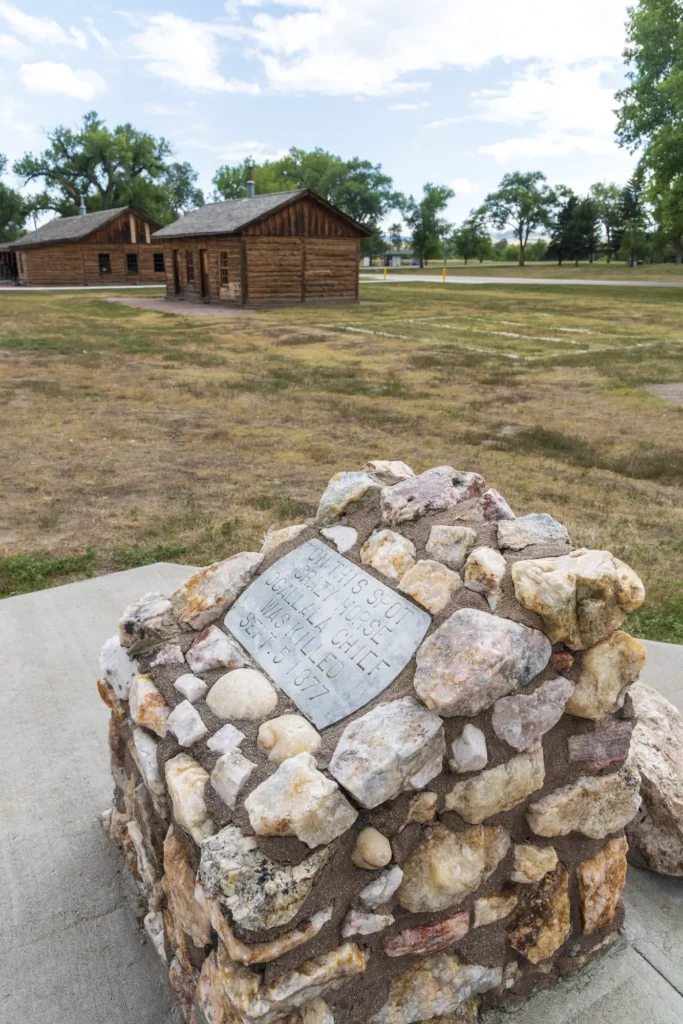
On September 5, 1877, soldiers attempted to place Crazy Horse inside the guardhouse at Fort Robinson. Accounts differ on exactly what happened, but during the struggle he was stabbed with a bayonet. He died that night.
His family carried his body away, and the location of his grave remains unknown.
For the Lakota, the death of Crazy Horse remains a wound tied to betrayal and the violence of the reservation era. For visitors today, the site connected to his death is one of the most sobering places in the park.
The Northern Cheyenne Breakout
Fort Robinson was also the scene of another tragedy: the Northern Cheyenne Breakout of 1879.
A band of Northern Cheyenne, led by Dull Knife and Little Wolf, had been forced south to Indian Territory. Conditions there were harsh, and many Cheyenne people suffered from hunger, sickness, and despair. Determined to return to their northern homeland, they fled north.
Some were captured and held at Fort Robinson. When they refused orders to return south, soldiers cut off food, heat, and water in an attempt to force compliance.
In January 1879, the Cheyenne attempted to escape into the bitter winter night. The breakout turned deadly. Men, women, and children fled through the snow while soldiers pursued them. Many were killed.
The event remains one of the darkest chapters in Fort Robinson’s history. It is a reminder of forced removal, desperation, federal policy, and the human cost of trying to erase Native people from their homelands.
Buffalo Soldiers and a Changing Fort
As the frontier period faded, Fort Robinson’s mission changed.
The post later became home to Buffalo Soldier units, including Black troops from the 9th and 10th Cavalry. Their service added another important layer to the fort’s military history.
These soldiers served during a segregated era when Black troops were often given difficult assignments and received limited recognition. Their time at Fort Robinson connects the park not only to Plains history, but also to the broader story of Black military service in the United States.
Fort Robinson was no longer only a post tied to the Indian Wars. It was becoming a long-term military installation with new roles in a changing country.
Horses, Mules, and the Remount Depot
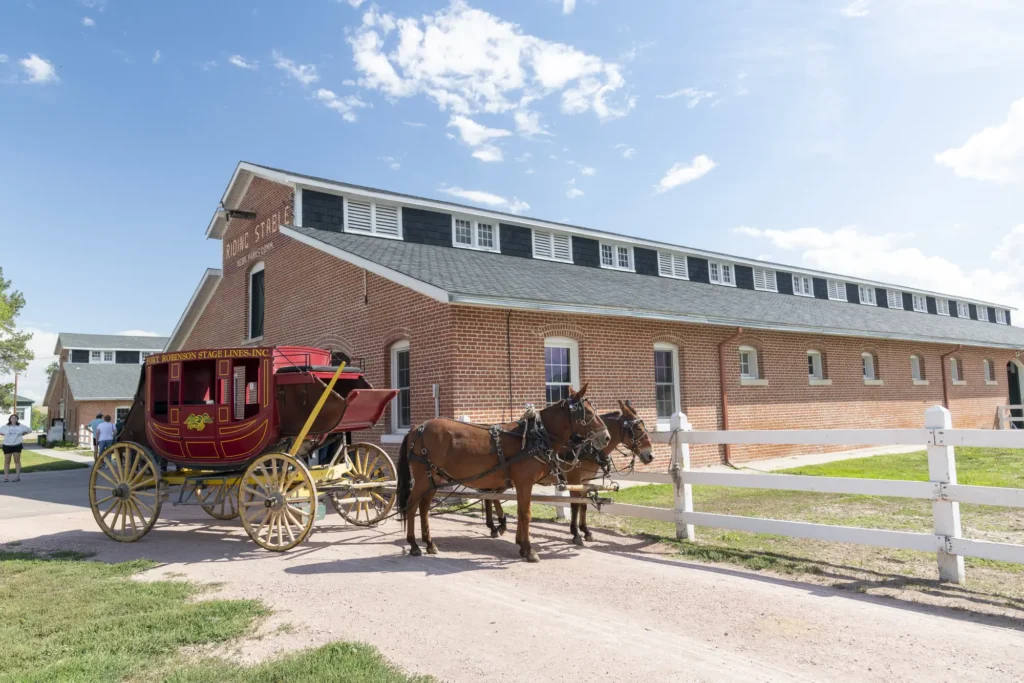
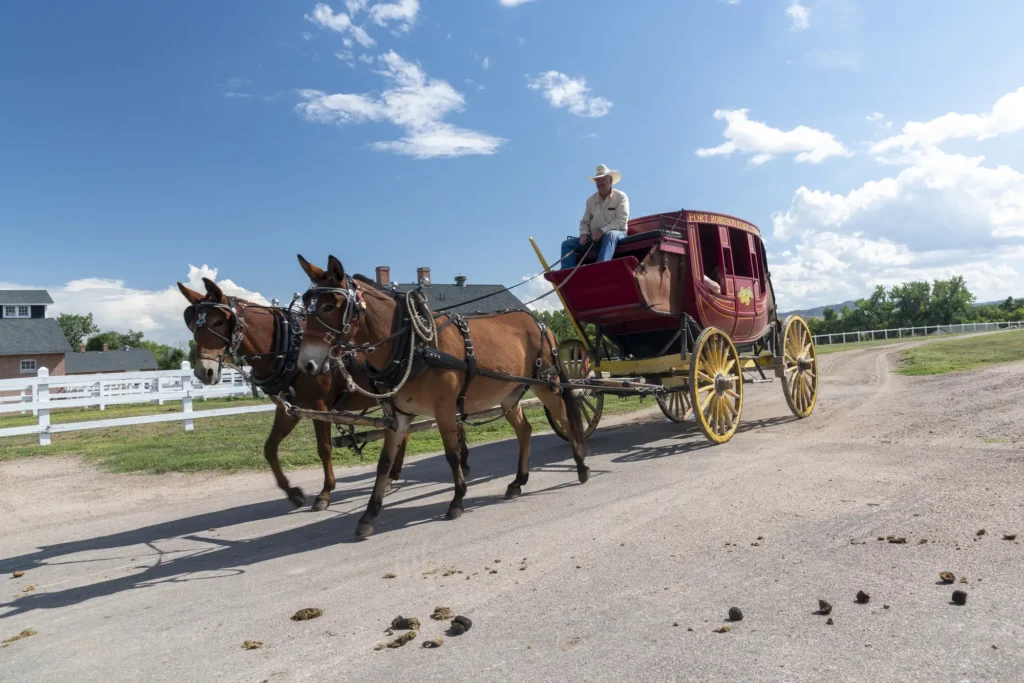
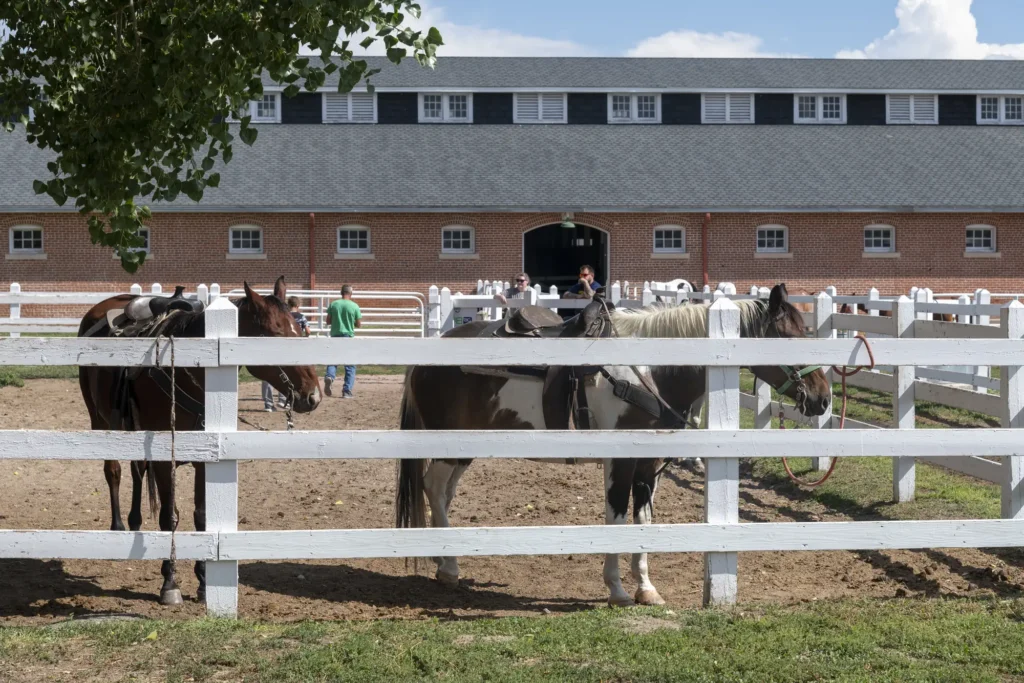
In the early 20th century, Fort Robinson became a major Army remount depot. Its job was to breed, train, and supply horses and mules for military use.
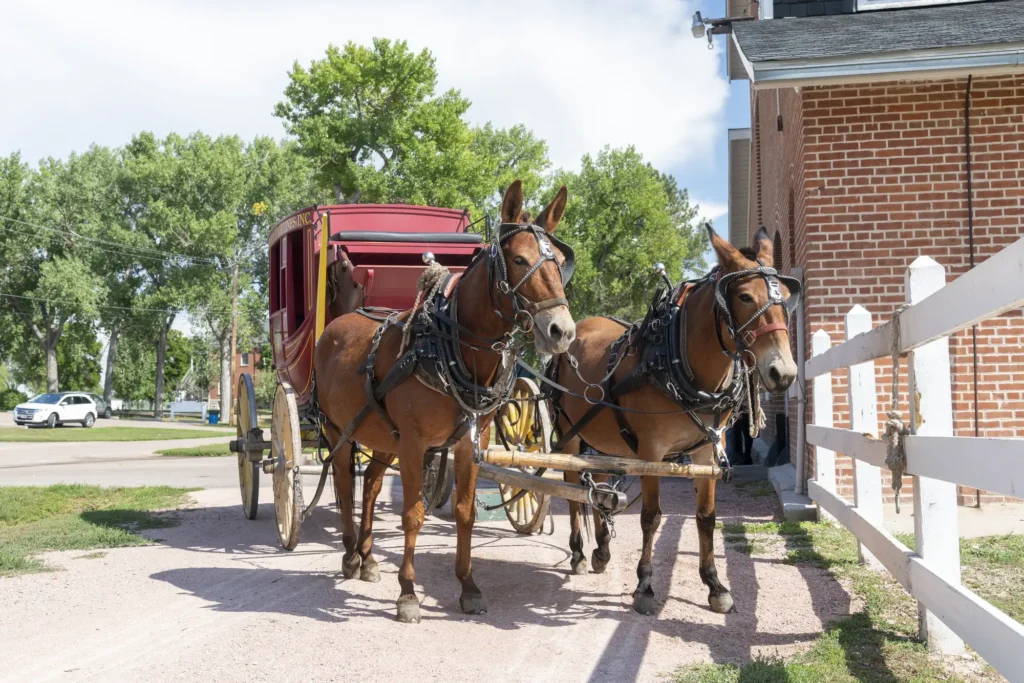
Thousands of animals passed through the fort. Horses and mules were trained for service and shipped to military posts across the country and beyond. Even as trucks and machines changed the military, animals remained important for transportation, supply, and field work.
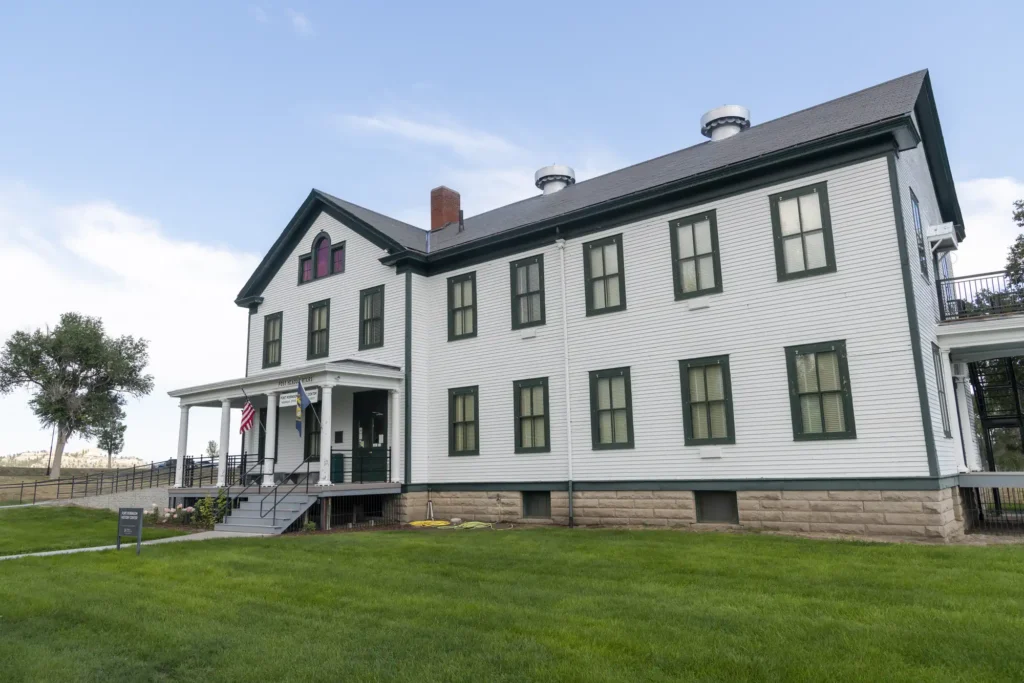
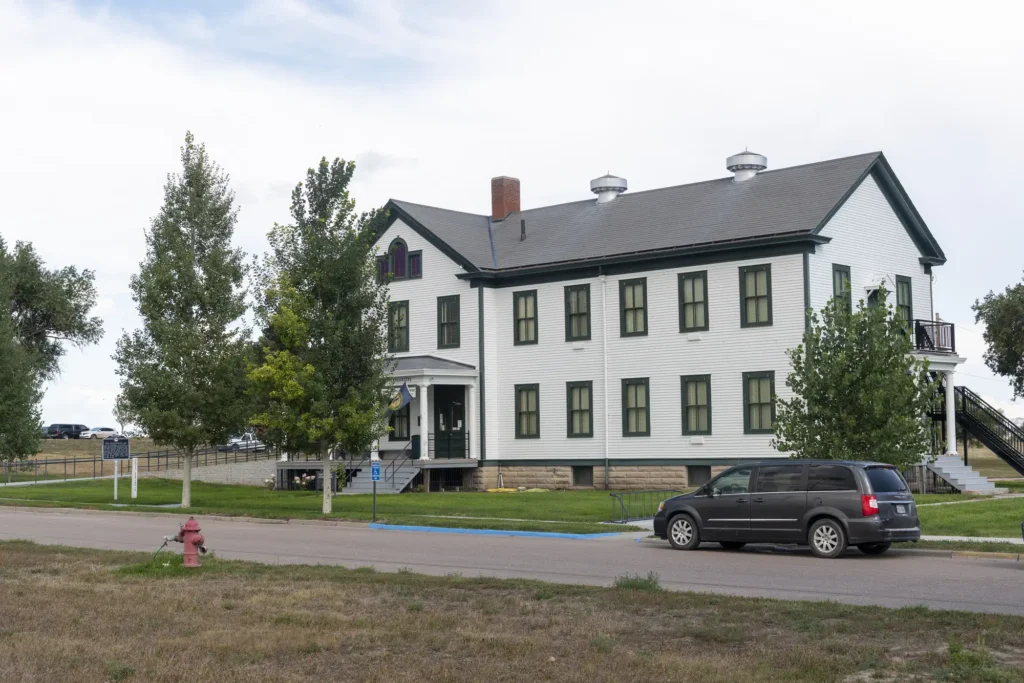
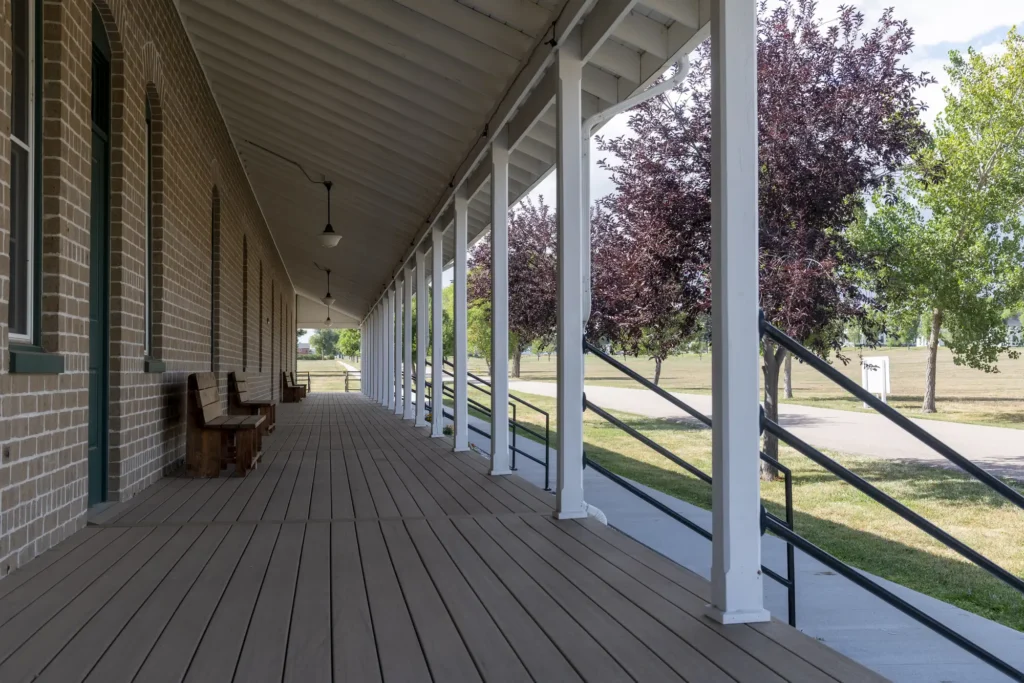
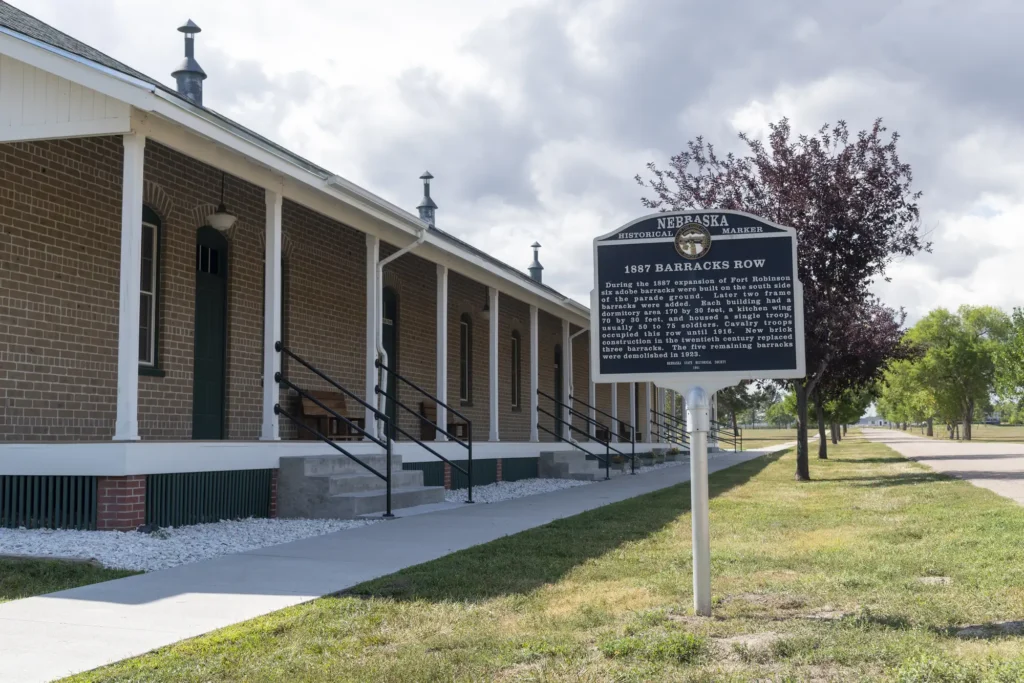
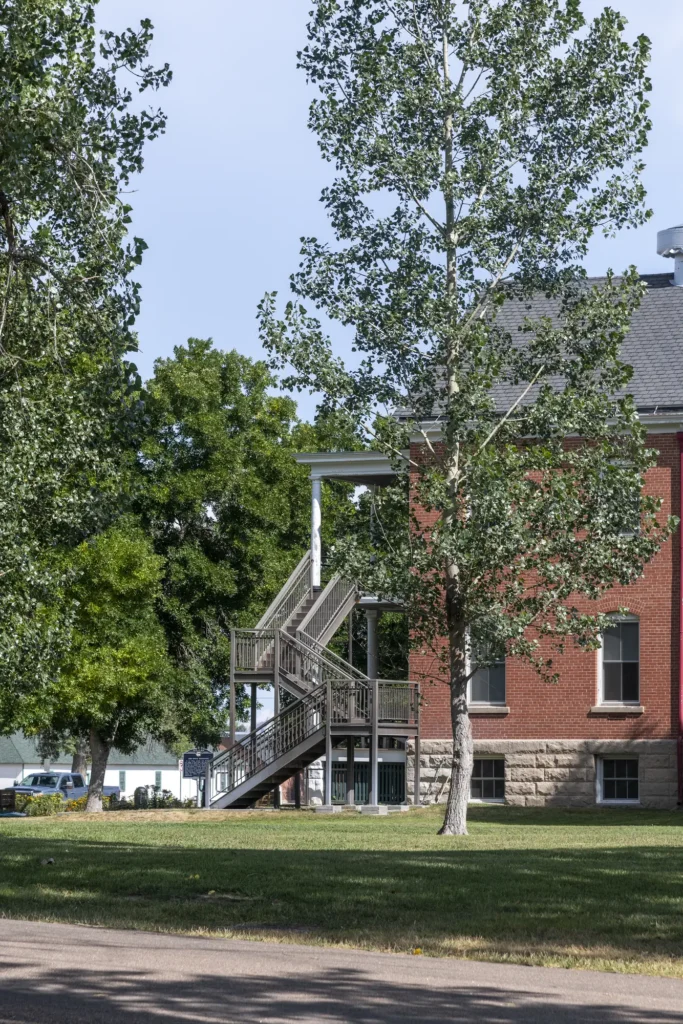
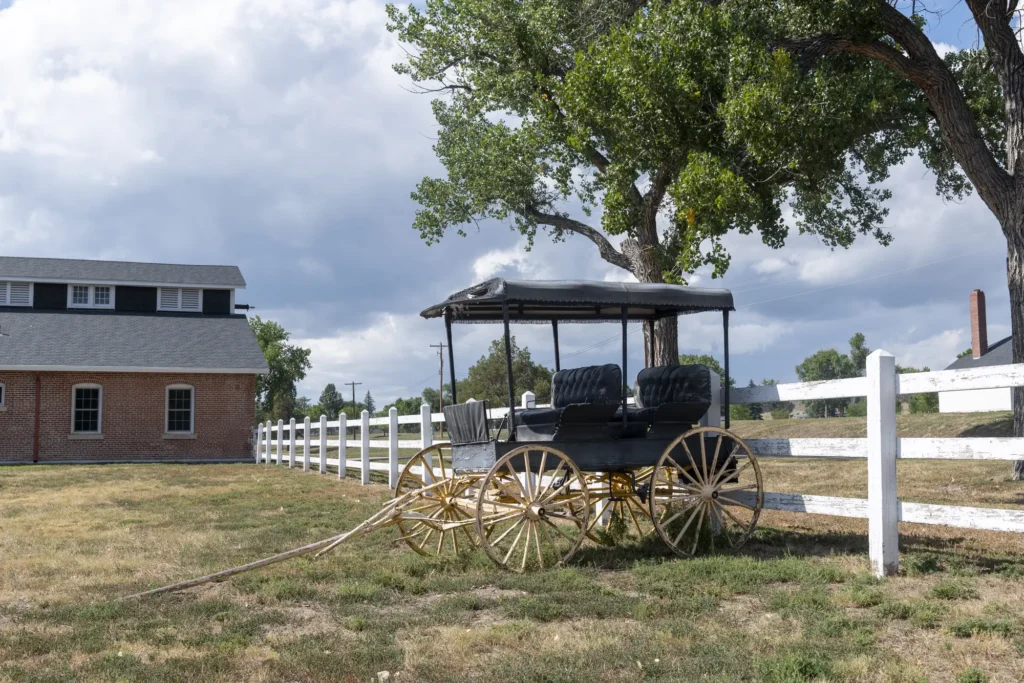
Many of the historic buildings, stables, and open grounds visitors see today are connected to this period. The remount years helped preserve the fort long after its original frontier mission had ended.
This chapter also explains why Fort Robinson still feels like a place built around horses, open ground, barns, trails, and working landscapes.
World War II and New Military Roles
During World War II, Fort Robinson took on new responsibilities.
The post became a training center for the Army’s K-9 Corps, where war dogs and handlers prepared for military service. It also served as a prisoner-of-war camp for captured German soldiers.
By then, Fort Robinson had become far more than a frontier outpost. Across its long military life, it had been tied to Native policy, cavalry operations, Black military service, horse and mule training, war dog preparation, and wartime prison operations.
Few historic places in Nebraska carry so many layers of military and cultural history in one location.
From Army Post to Nebraska State Park
After World War II, Fort Robinson’s military role came to an end. The Army closed the post in 1948, and the property was later used for agricultural research.
In the 1950s, Nebraska began preserving the site as a state park. That decision changed the future of Fort Robinson. What had once been a military installation became a place of public memory, historic preservation, recreation, and education.
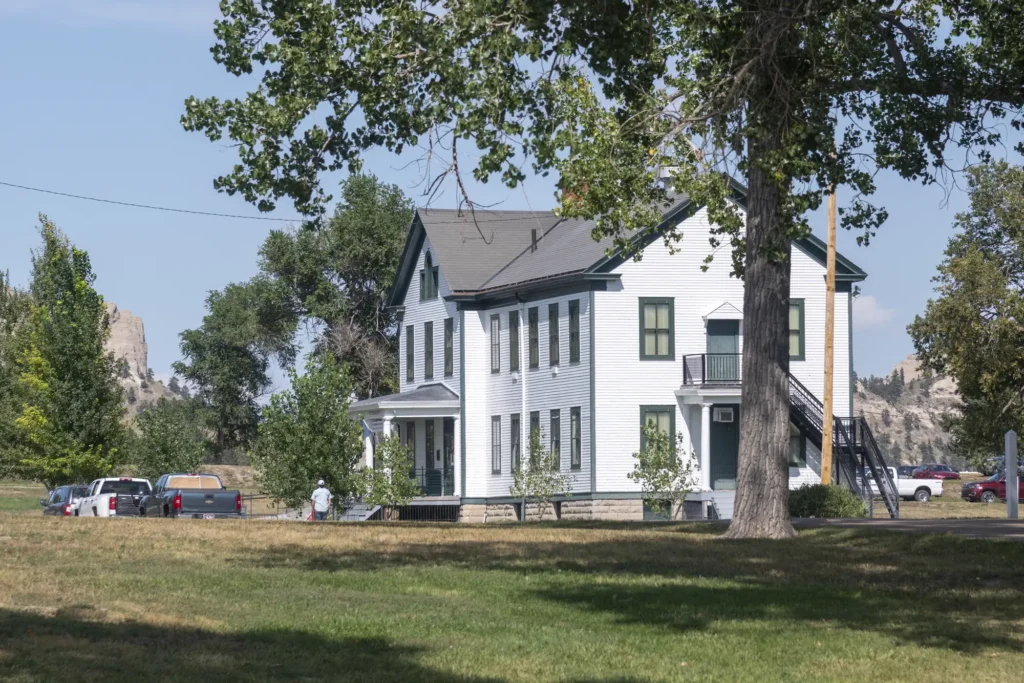
Today, Fort Robinson State Park covers thousands of acres in northwest Nebraska. It preserves historic buildings, protects Pine Ridge scenery, and gives visitors the chance to experience one of the most important destinations in the state.
What Visitors Can See and Do
Fort Robinson is not a look-from-the-road kind of place. It rewards time.
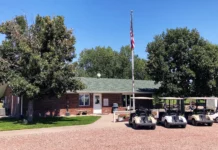
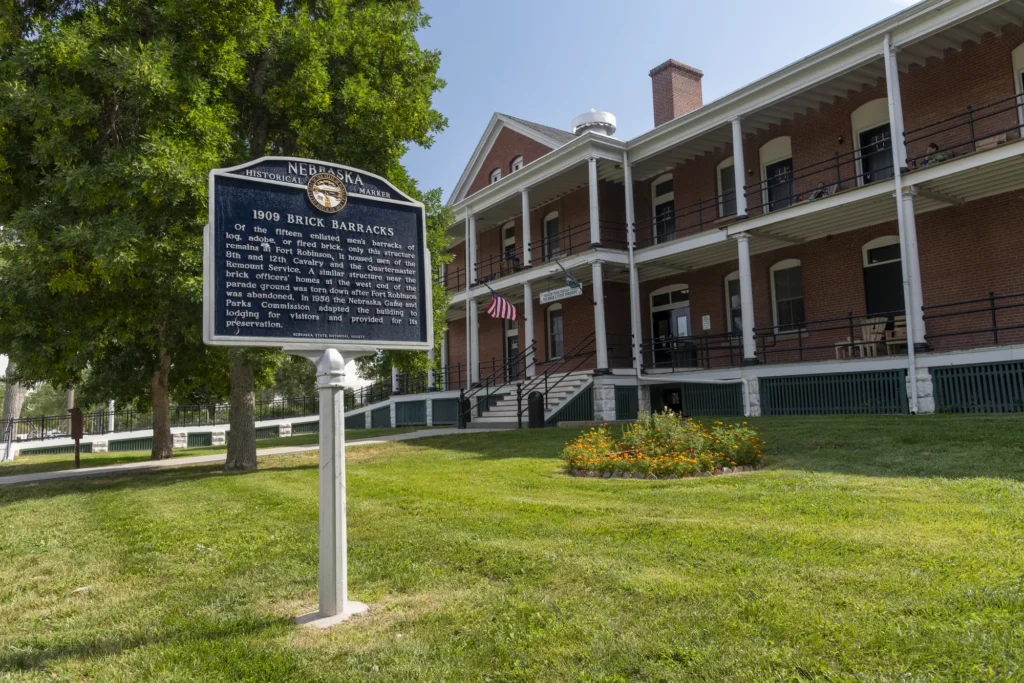
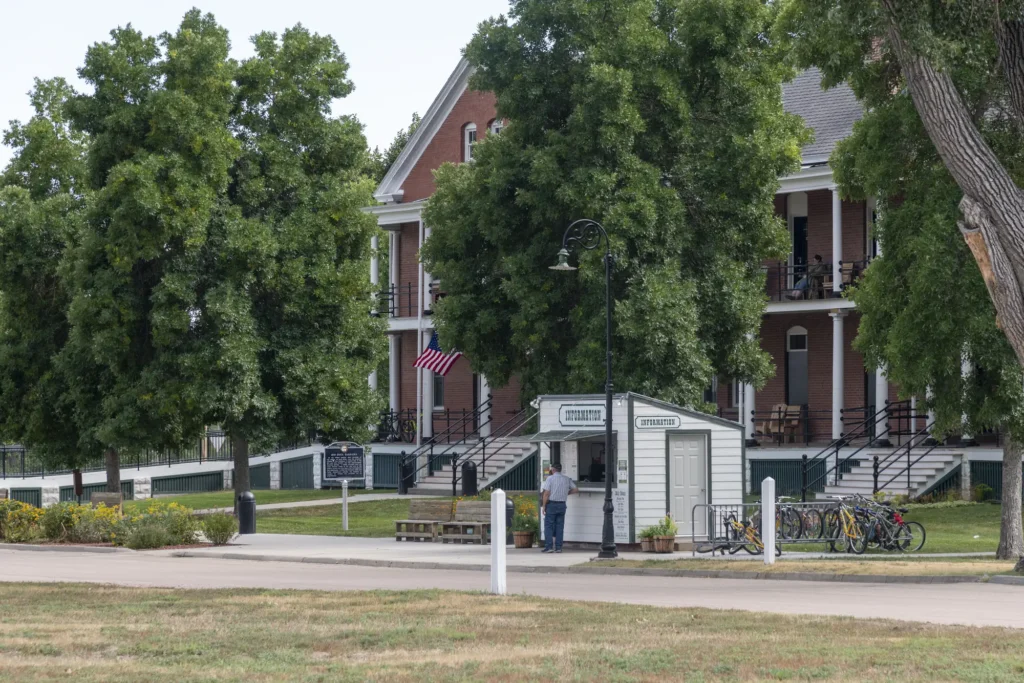
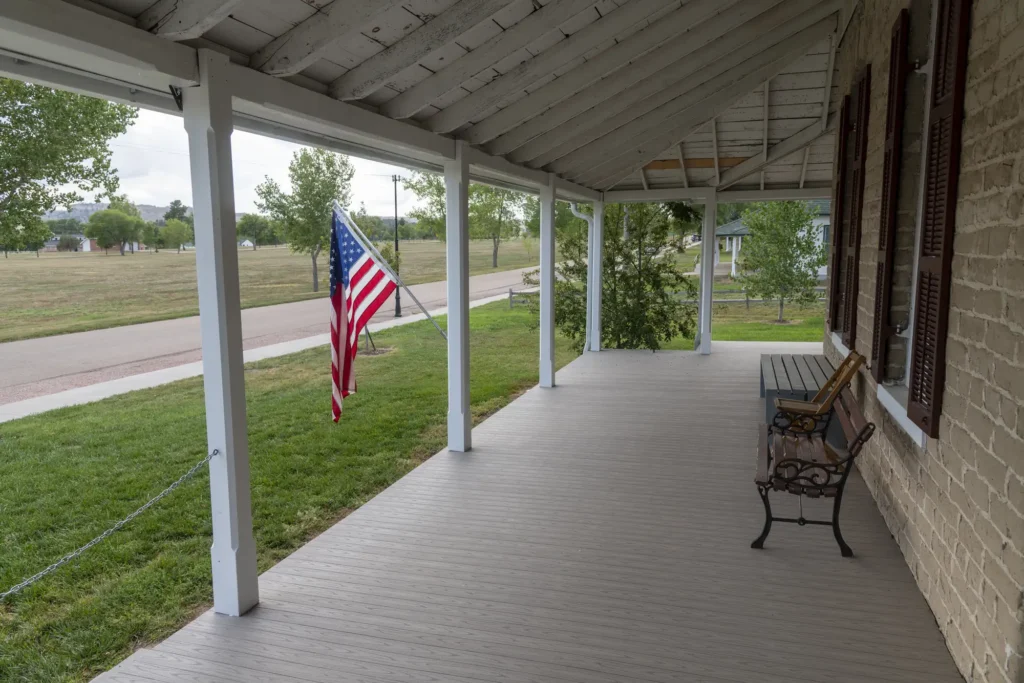
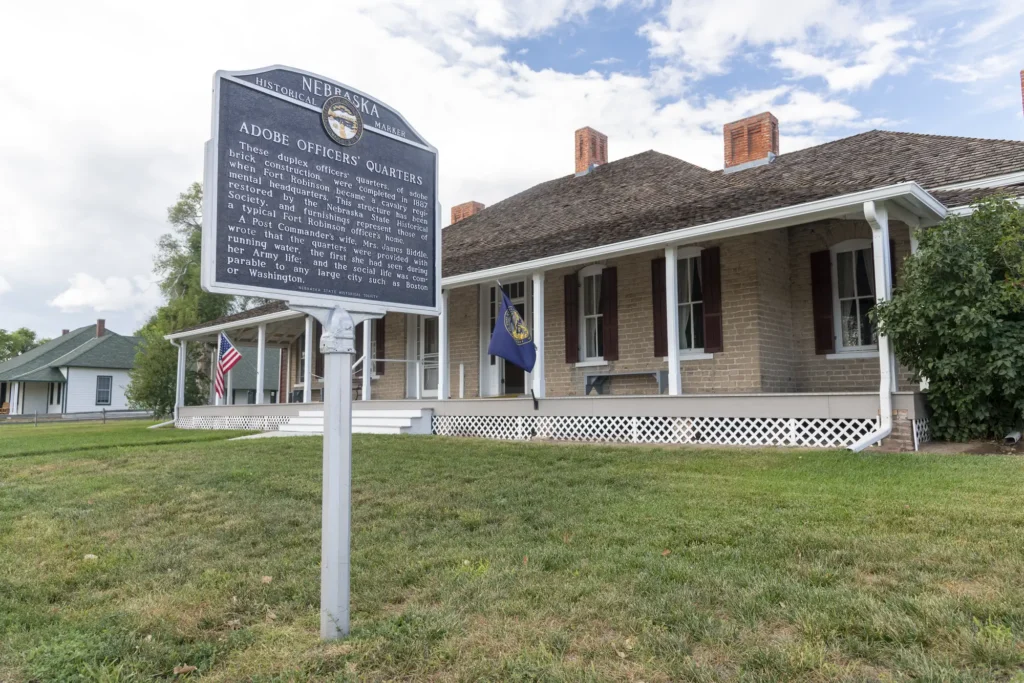
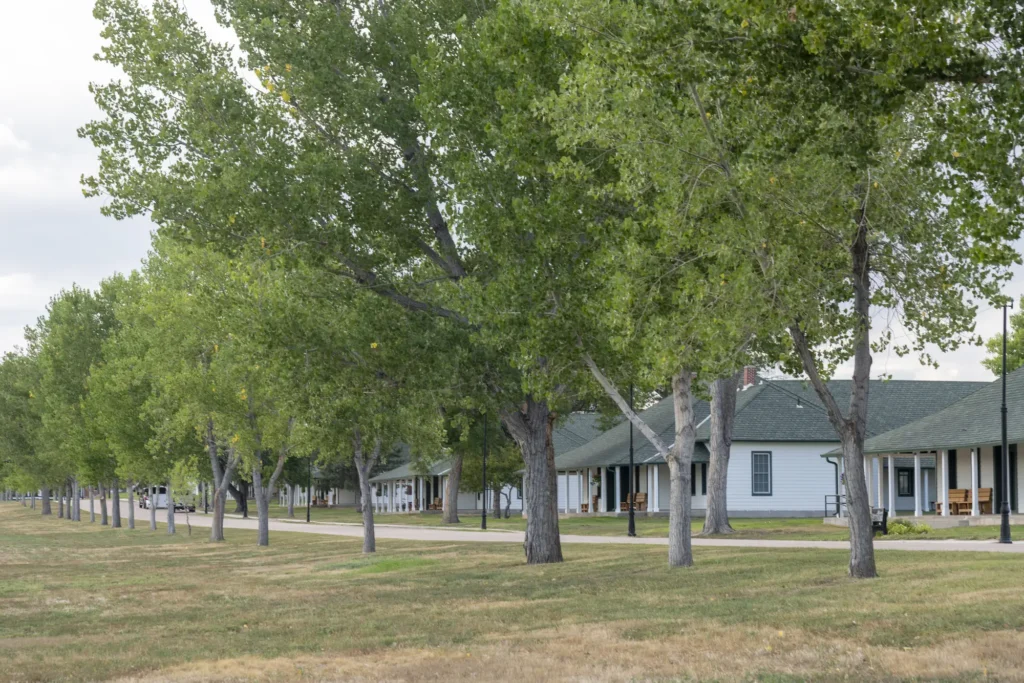
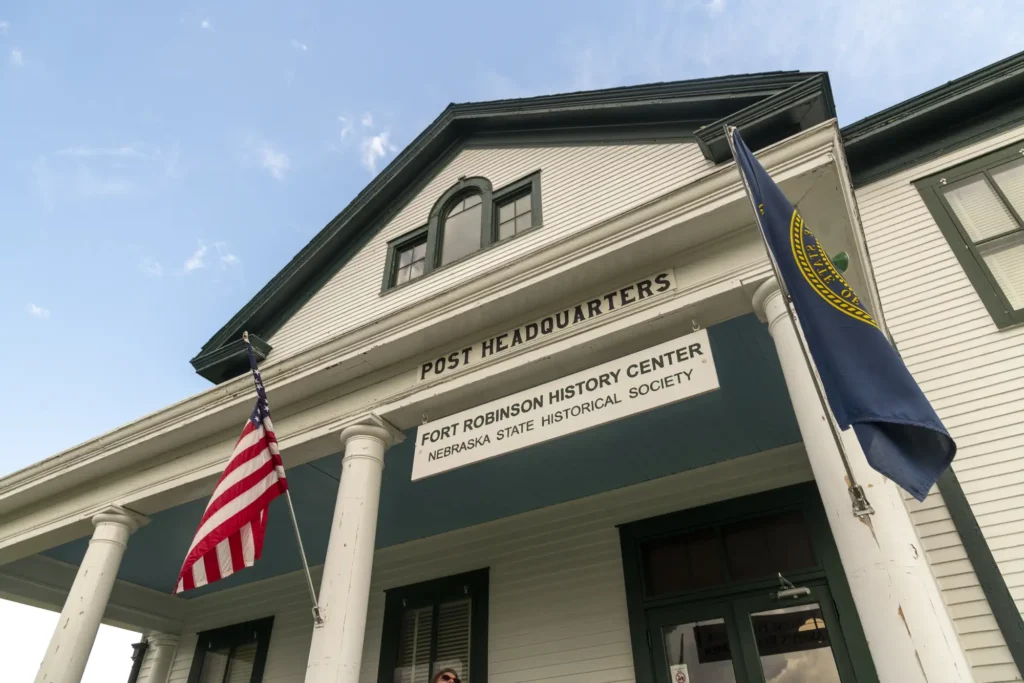
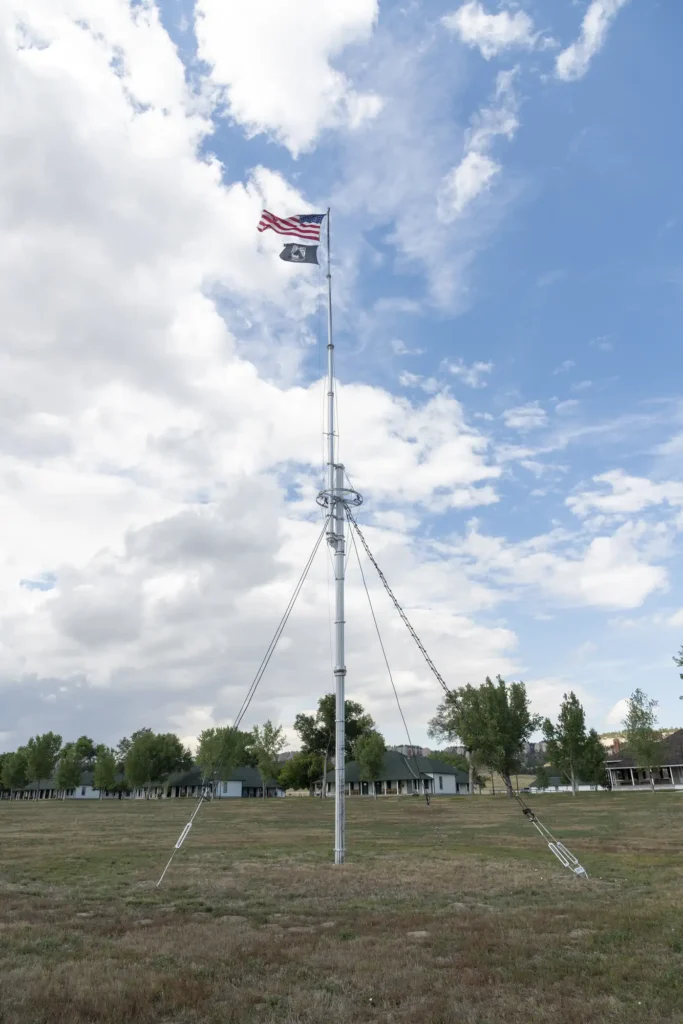
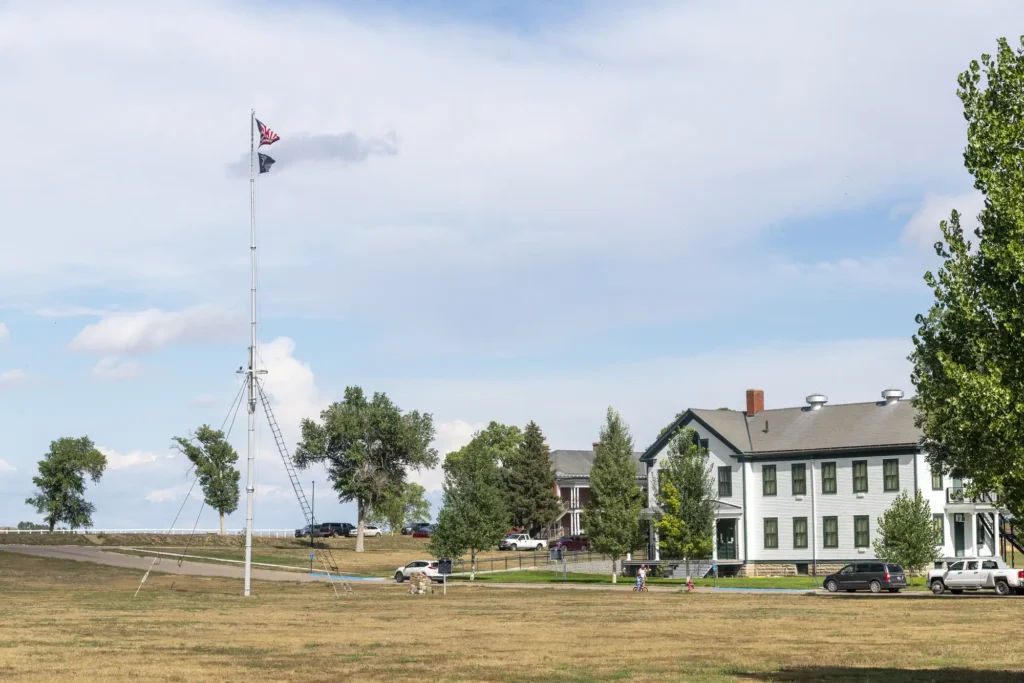
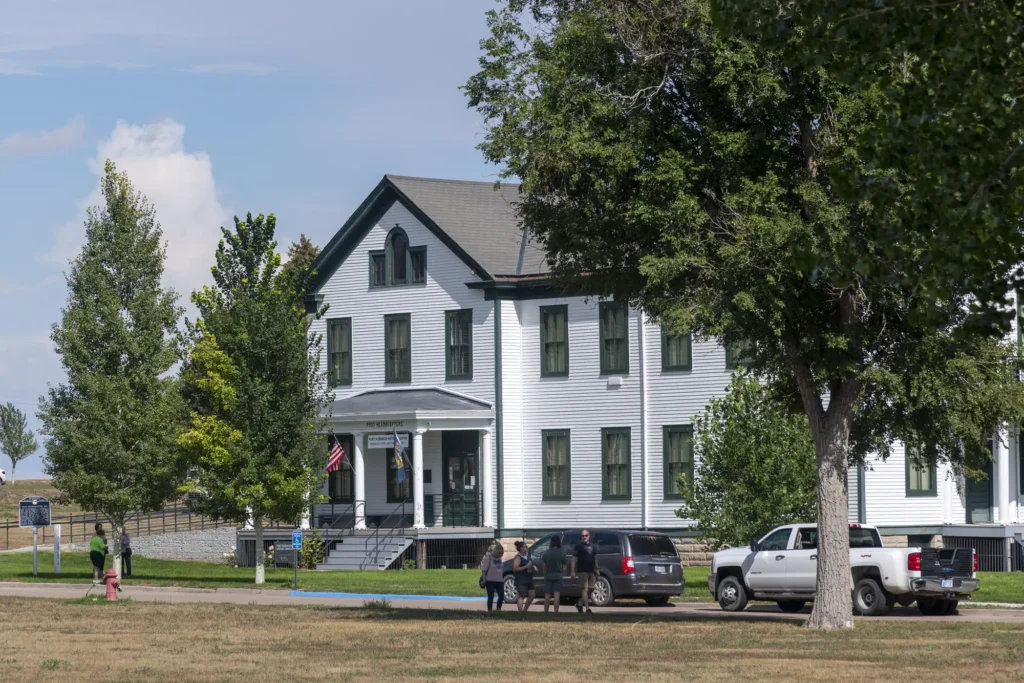
Visitors can walk the old parade grounds, explore historic buildings, visit museum exhibits, and see markers tied to the death of Crazy Horse and the Northern Cheyenne Breakout. The Fort Robinson History Center helps explain the military, Native, and regional history connected to the park.
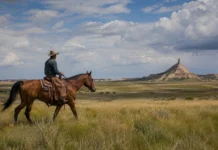
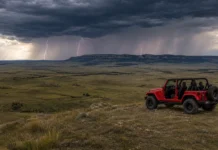
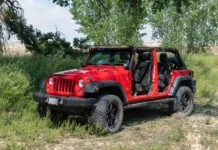
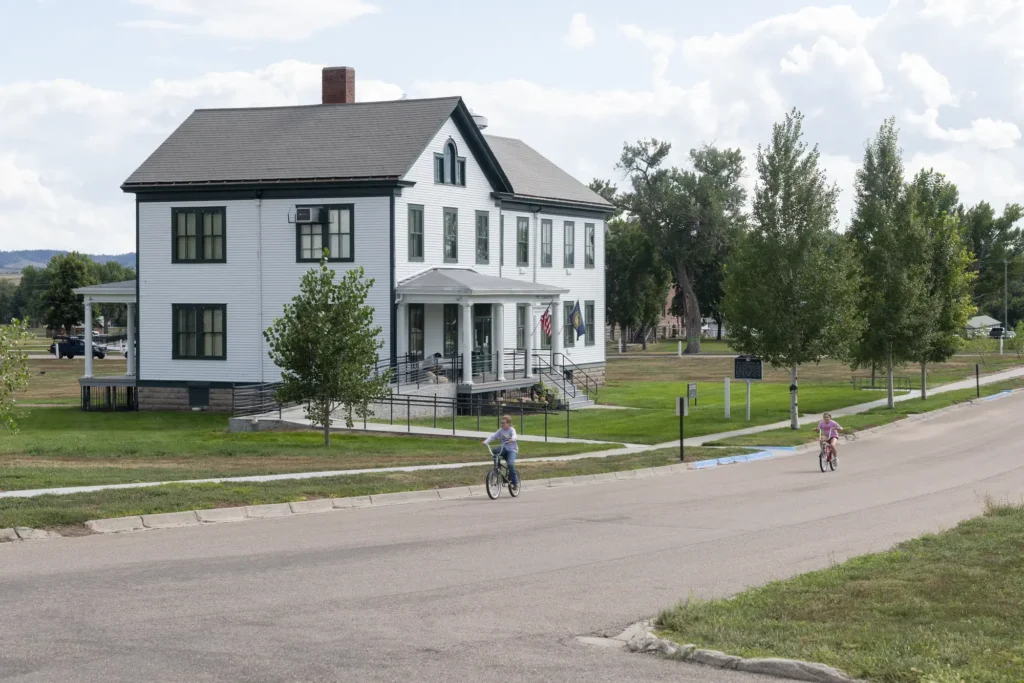
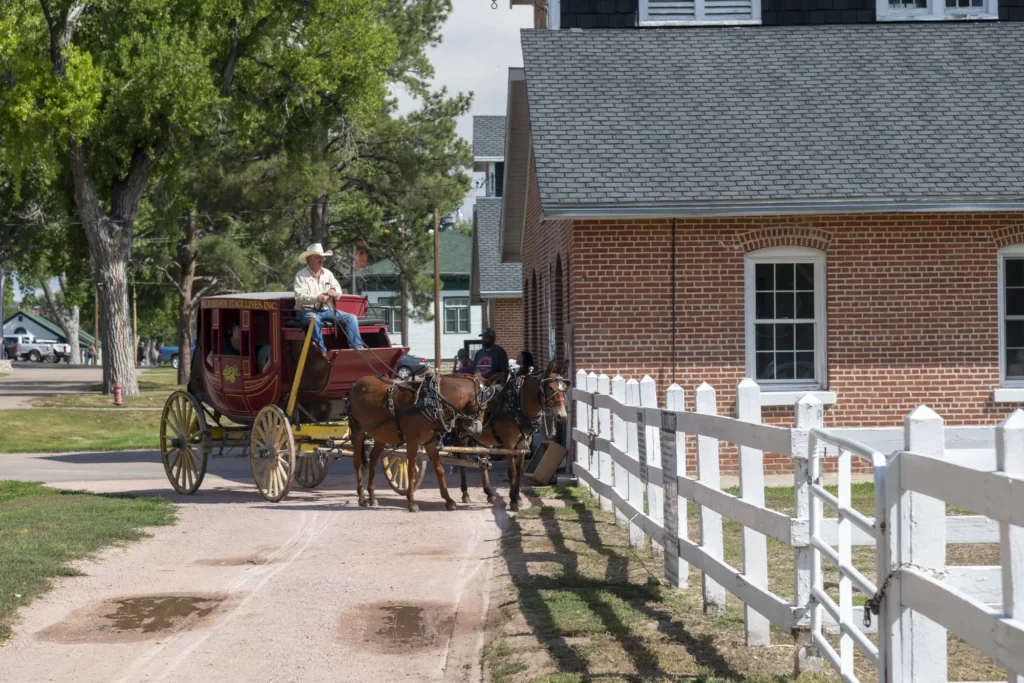
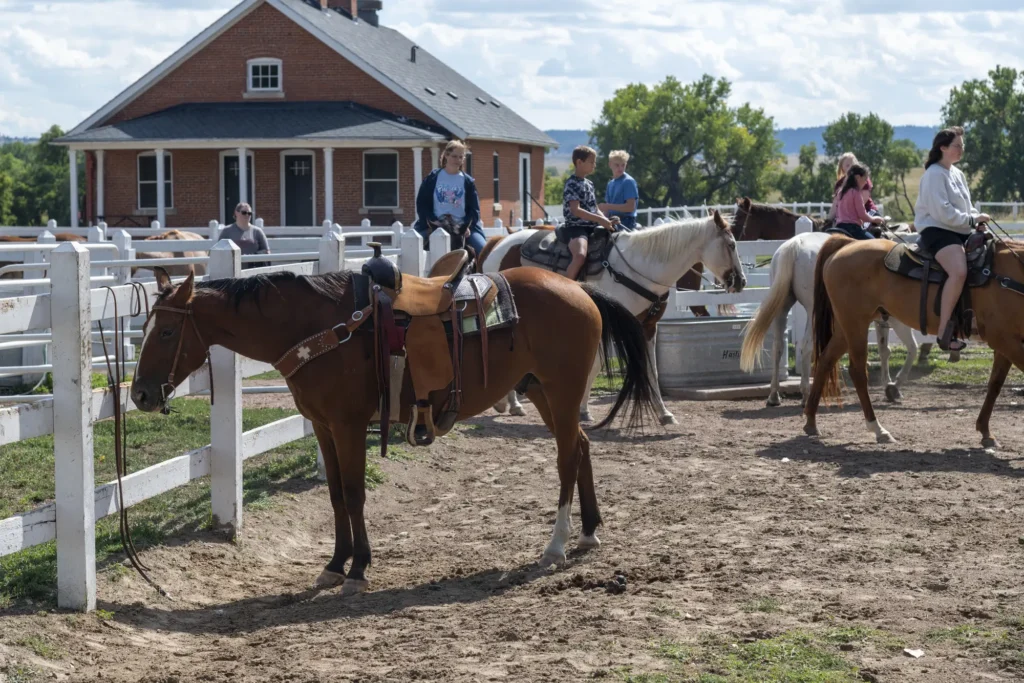
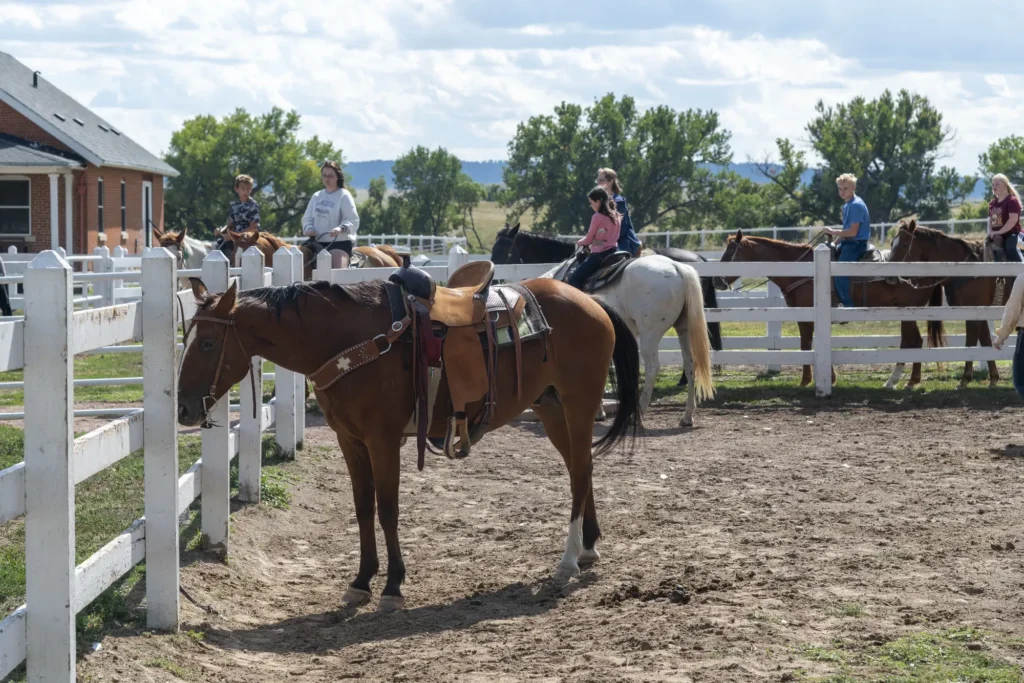
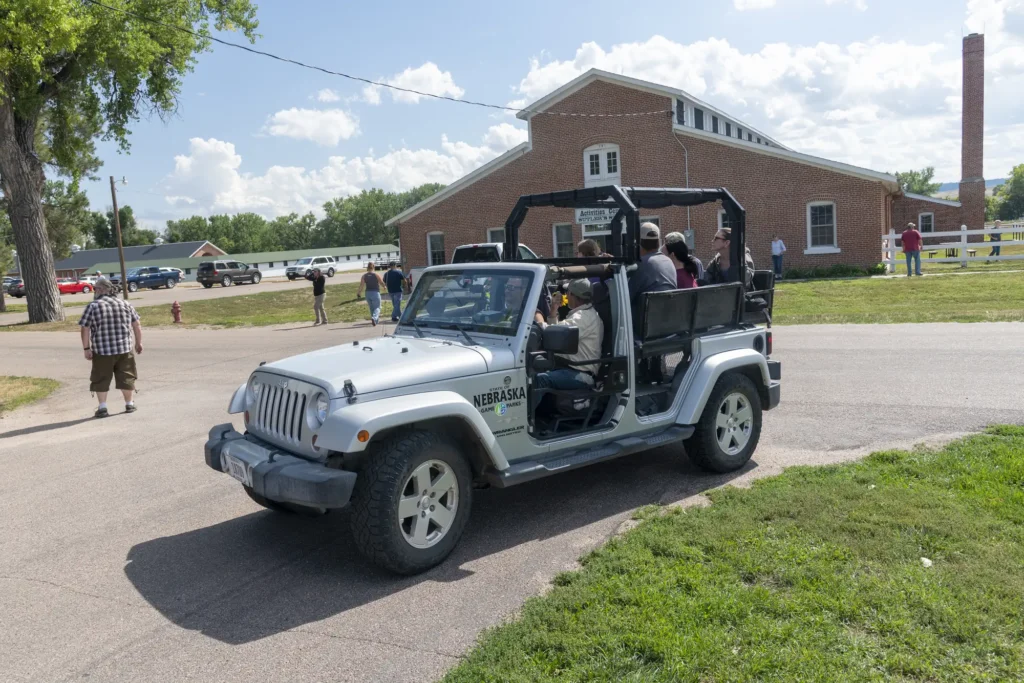
The park also offers lodging in restored historic buildings, cabins, campgrounds, hiking trails, horseback rides, jeep tours, stagecoach rides, fishing, scenic drives, and wildlife viewing. Bison and Texas longhorn herds can be seen in the park, giving visitors a living connection to the plains landscape.
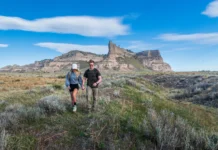
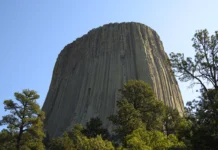
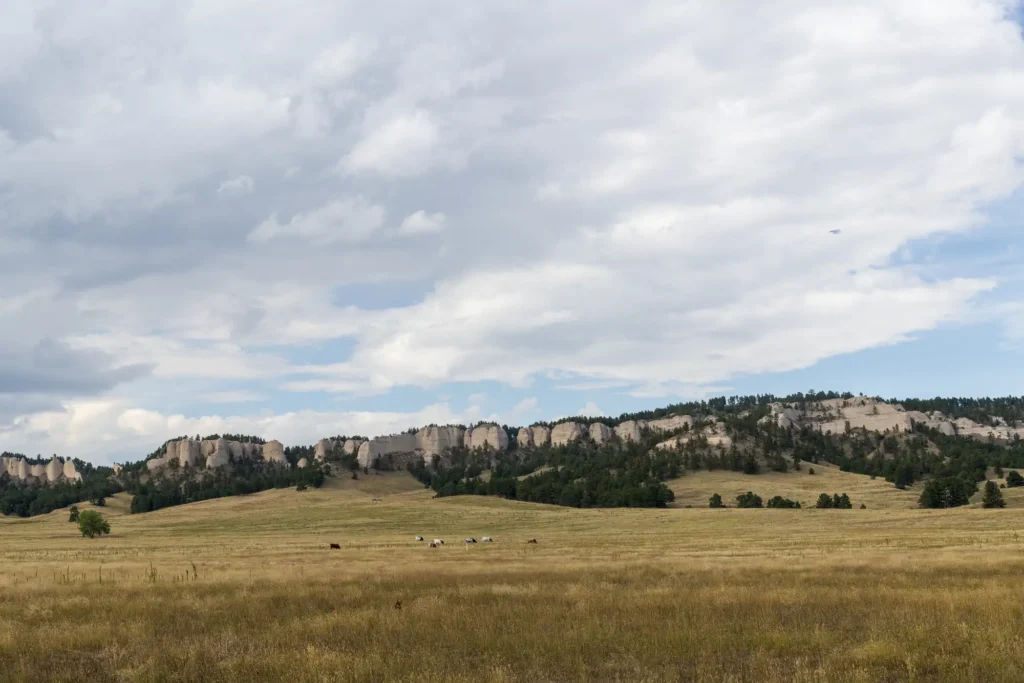
The surrounding Pine Ridge country is part of the experience. Buttes, grasslands, cottonwoods, ridgelines, and long views make Fort Robinson one of the most scenic places in western Nebraska.
Trailside Museum and Fossil History
Fort Robinson is also home to the Trailside Museum of Natural History.
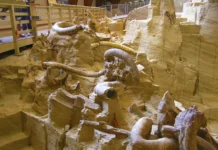
The museum adds a natural history side to the visit, with exhibits on fossils, geology, and prehistoric life in western Nebraska. One of its best-known displays is the “Clash of the Mammoths,” featuring two mammoth skeletons found locked together by their tusks.
For families, fossil enthusiasts, and travelers interested in the deeper history of the High Plains, Trailside Museum is a strong stop while visiting the park.
Why Fort Robinson Still Matters
Fort Robinson is not a simple story.
For some visitors, it is a beautiful Nebraska state park with lodging, trails, horses, wildlife, and family activities. For others, it is painful ground connected to betrayal, forced relocation, and death. For historians, it is one of the most important military and cultural sites on the northern Plains.
All of that is true.
That is why Fort Robinson matters. It does not allow the history of the West to be reduced to easy myths. It asks visitors to look at the full story: Native resistance, federal power, military force, survival, loss, adaptation, and remembrance.
At the same time, the park is still alive. Families camp there. Visitors ride horses through the hills. Children explore the grounds. Travelers stay in old military buildings and wake beneath the same open Nebraska sky that watched over generations before them.
The past is heavy here, but the place is not frozen in time. It is preserved, used, visited, and remembered.
Planning a Visit to Fort Robinson State Park
Fort Robinson State Park is located near Crawford, Nebraska, along U.S. Highway 20.
For travelers coming from Gering, Scottsbluff, or Scotts Bluff National Monument, the park works well as a day trip or overnight destination. Visitors who enjoy history, photography, hiking, camping, horseback riding, museums, wildlife, and scenic drives will find plenty to do.
The best time to visit depends on what kind of trip you want. Summer offers the most activities and programming. Fall brings cooler weather, quieter trails, and beautiful color in the Pine Ridge. Spring and winter can also be rewarding for travelers who prefer solitude and a more reflective visit.
A Destination Worth the Drive
Fort Robinson State Park is one of western Nebraska’s essential travel destinations. It brings together history, scenery, recreation, wildlife, and memory in a way few places can.
It is a place to walk slowly. Read the markers. Visit the museums. Look toward the buttes. Remember Crazy Horse. Remember the Northern Cheyenne. Remember the soldiers, families, horses, war dogs, prisoners, and communities that passed through this ground.
Fort Robinson is not just where history happened.
It is where history still speaks.