
Western Nebraska does not beg for attention. It waits.
It waits under a sky that feels too large for the map, behind grasslands that roll for miles, and beneath bluffs that once guided emigrants, traders, soldiers, ranchers, and dreamers across the open country. This is not the glossy, packaged version of the West. Western Nebraska is older than that, quieter than that, and in many ways better for it.
Out here, the best attractions are not crowded into one polished strip. They are spread across miles of prairie, badlands, pine ridges, cattle towns, fossil beds, state parks, and historic trail corridors. You earn the place by driving it.
These ten stops offer a strong starting point for anyone wanting to understand western Nebraska — not just as a place to pass through, but as a destination worth slowing down for.
1. Scotts Bluff National Monument — Gering
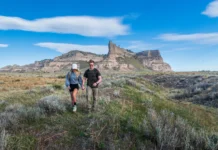
Scotts Bluff National Monument is the heavyweight landmark of the Nebraska Panhandle. Rising above the North Platte River Valley, it served as a major landmark for Native peoples, fur traders, soldiers, and emigrants traveling the Oregon, California, Mormon Pioneer, and Pony Express trails.
Visitors can hike, drive to the summit when the road is open, explore the visitor center, and look across a landscape that still gives a person a sense of distance. From the top, the valley opens wide, and it becomes easy to understand why this place mattered. It was not just scenery. It was a signpost on the long road west.
2. Chimney Rock National Historic Site — Bayard
If Scotts Bluff is the wall, Chimney Rock is the exclamation point.
This narrow sandstone spire rising from the prairie became one of the most recognized landmarks on the Great Platte River Road. For thousands of travelers heading west, Chimney Rock marked progress, danger, distance, and hope all at once.
The best way to see Chimney Rock is not to rush it. Watch it from a distance. Let it sit on the horizon the way emigrants would have seen it. That is when the place starts to speak.
3. Courthouse and Jail Rocks — Bridgeport
Before many travelers reached Chimney Rock, they saw Courthouse and Jail Rocks. These massive formations were among the first major landmarks that told westbound travelers they were entering a different kind of country.
That lack of polish is part of the appeal. Courthouse and Jail Rocks still feel wild and lonely. They sit south of Bridgeport, standing above the prairie like natural monuments to exhaustion, hope, and endurance. For photographers, history travelers, and anyone tracing the Oregon Trail corridor, this stop belongs on the list.
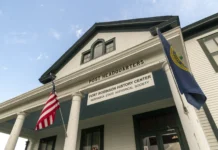
4. Fort Robinson State Park — Crawford
Fort Robinson is one of the most complete western Nebraska destinations because it combines history, scenery, lodging, trails, museums, and outdoor recreation in one place.
The setting is hard to beat. Pine Ridge buttes rise around the old military post, and the landscape carries layers of Native American history, military history, ranching history, and frontier tourism. It is the kind of place where a family can stay several days without running out of things to do.
Visitors can explore historic buildings, ride horses, hike the trails, camp, stay overnight, attend summer theater productions, and use the park as a base for exploring northwest Nebraska.
5. Toadstool Geologic Park — Near Crawford
Toadstool Geologic Park is where western Nebraska starts looking like another planet. The eroded badlands, fossil-bearing formations, and strange mushroom-shaped rocks make it one of the most unusual landscapes in the state.
This is a place for hikers, photographers, geology lovers, and people who like their landscapes a little rough around the edges. Bring water, good shoes, and common sense. The beauty here is real, but so is the exposure.
Toadstool is especially powerful because it does not feel overly managed. It feels discovered. The formations, trails, and open sky create one of the most visually striking stops in western Nebraska.
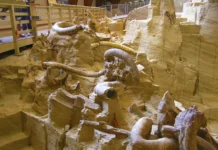
6. Agate Fossil Beds National Monument — Harrison
Agate Fossil Beds National Monument is one of western Nebraska’s most important scientific and cultural sites. It preserves fossil discoveries from an ancient world, including prehistoric mammals that once roamed this region long before the modern Great Plains took shape.
The monument also preserves important cultural history tied to Plains tribes and the people who lived with this land long before modern highways crossed it.
The visitor center, fossil exhibits, cultural collections, and walking trails make Agate more than a quick stop. It is a reminder that western Nebraska history does not begin with wagon trains. It reaches back millions of years.
7. Carhenge — Alliance
Carhenge is exactly what it sounds like: a Stonehenge-inspired monument built from old cars.
Is it strange? Absolutely. Is it worth stopping for? Also absolutely.
Western Nebraska has plenty of solemn history and grand scenery. Carhenge adds a grin to the itinerary. It is a reminder that the West is not only about hardship and monuments. Sometimes it is about a family reunion, some old automobiles, and a weird idea that worked.
It is quirky, memorable, easy to visit, and one of the most photographed roadside attractions in the state.
8. Wildcat Hills State Recreation Area — South of Gering
The Wildcat Hills offer one of the best scenic escapes near Gering and Scottsbluff. This rugged escarpment rises south of the North Platte River Valley, with pine-covered ridges, rocky draws, hiking trails, wildlife habitat, and wide views across the Panhandle.
This is where the prairie starts to climb. The Wildcat Hills are excellent for hiking, wildlife watching, photography, and simply getting above the valley floor. For travelers based in Gering or Scottsbluff, it is one of the easiest ways to add a strong outdoor stop without driving half the day.
The nature center also makes it a good stop for families or visitors wanting to better understand the animals, plants, and geology of the region.
9. Lake McConaughy — Ogallala
Western Nebraska is not all dry grass and sandstone. Lake McConaughy, known by many as Big Mac, brings water, beaches, boating, fishing, camping, and summer recreation into the mix.
For road-trippers, Lake McConaughy changes the pace. After days of trail history, bluffs, and badlands, the white sand beaches and open water feel almost unexpected. It is one of the best places in western Nebraska to camp, swim, watch a sunset, or simply cool off when summer starts cooking the plains.
It also gives travelers a reason to linger around Ogallala instead of just passing through on Interstate 80.
10. Ogallala’s Boot Hill and Cowboy History
Ogallala was once one of the great cattle towns of the West, and Boot Hill keeps that harder-edged history alive.
This was the kind of place where cattle drives, railroad commerce, saloons, cowboys, gamblers, and frontier trouble all crossed paths. The town’s cowboy past remains one of its strongest travel draws.
Boot Hill, Front Street, and Ogallala’s western heritage make it a fitting final stop on a western Nebraska itinerary. This is cattle-town history without much varnish, and that is the point.
The Road Between Them Matters
The mistake many travelers make is treating western Nebraska as empty space between destinations. That is dead wrong.
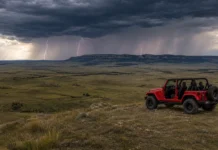
The road is part of the experience. The distance between Gering, Bridgeport, Bayard, Alliance, Crawford, Harrison, and Ogallala is not wasted time. It is the shape of the region. It is where you see windmills, wheat fields, cattle, storms building over the plains, old barns leaning into the weather, and buttes appearing on the horizon long before you reach them.
Western Nebraska rewards travelers who are willing to slow down. It is not built for people who need entertainment every five minutes. It is built for people who still know how to look out a windshield and wonder what happened here before they arrived.
Final Word
The top ten things to do in western Nebraska are not just attractions. They are chapters.
Scotts Bluff and Chimney Rock tell the story of migration. Courthouse and Jail Rocks mark the early trail. Fort Robinson carries the weight of military and Native history. Toadstool and Agate reveal a prehistoric world buried beneath the grass. Carhenge proves the region still has a sense of humor. Wildcat Hills and Lake McConaughy show the outdoor side of the Panhandle. Ogallala keeps the cattle-town legend alive.
Together, they make western Nebraska one of the most underrated travel regions in the Great Plains.
It is rugged country. It is honest country. And for those willing to give it more than a passing glance, it is unforgettable.